TRACE TAYLOR

The Use of Myth in the Systemic Stratification of a Nation by Trace Taylor
https://thetracetaylor.com/2019/01/09/the-use-of-myth-in-the-systematic-stratification-of-a-nation/
Trace Taylor, MLA
Phi Kappa Phi, Φ Κ Φ
Omicron Delta Kappa, Ο Δ Κ
Interdisciplinary Studies, Curriculum & Instruction
w/DEIB & Sustainability Concentrations (College of Education PhD program, USF)
Socratic Method. Multiple Intelligence Theory. Multiple Learning Styles Theory. Universal Design Learning (UDL). Experiential Immersive Learning. Neurodivergent Learning. Quantum Transcendence Intention. Hermeneutics interdisciplinary studies. It’s all about exposure because you cannot teach or learn inside an unadaptable unresponsive concrete box.
Paulo Freire made it clear; learning happens best when learners are organized around related, relevant topics and organize themselves and their actions around these topics. My job is to teach people to think critically and organize themselves into critical action.
Numerous studies show increased student choice, freedom of expression (voice), and involvement increase learner engagement, motivation, investment, all of which amp up students’ LOVE of learning, and this leads to more academic success and achievement and a sense of contribution and self-confidence. Most noted and respected educators around the world and their research say so. My own personal experience as a neurodivergent thinker and learner says so. My professional practice, experience, and field research say so.
In order to shift power from Oppressors to the Oppressed, a pedagogy “must question the status quo in the name of social justice” (Freire 1970). Such a pedagogy would need to be a situated pedagogy open to (the) diversity that provides “…a rich lexicon of practice and dialogue” (Freire 1970), adaptable to many places, spaces, and circumstance; “student centered, constructivist, and critical of inequality, (as) …no pedagogy can be neutral” (Freire 1970). An effective pedagogy must promote talent development, building on strengths rather than focusing on weaknesses and what a learner lacks (Astin 1984, 1985). A multicultural pedagogy must respect and incorporate the multicultural, multiethnic, and experience diversity that comprises each individual if the Oppressed are to gain access to the evolving language of power and their political voices (Freire 1970; The New London Group 1996; Ladson-Billings 1995). A Pedagogy should seek “to perpetuate and foster—to sustain—linguistic, literate, and cultural pluralism as part of the democratic project of schooling. In the face of current policies and practices that have the explicit goal of creating a monocultural and monolingual society, research and practice need equally explicit resistances that embrace cultural pluralism and cultural equality” (Paris 2012). The Critical, Social-Justice Pedagogy (attraction, engagement, self-realization, awareness, self-governance, and diversity), the Multicultural Pedagogy (attraction, engagement, self-realization, awareness, self-governance, and diversity), the Multiliteracies Pedagogy (all eight intelligences equally engaged and applied to interdisciplinary study), and the Culturally Sustaining Pedagogy (inclusive of cultural diversity), are all fundamental to the Pedagogy of Access. The Pedagogy of Access is an evolution of Freire’s Pedogogy of the Oppressed (1970). It is the next evolution of the most effective means by which to empower the voices of the Oppressed across the broadest spectrum of the global human population.
Read the rest of the article HERE

The Systematic Stratification of a Nation
Homo sapiens sapiens (humans) is the only extant (living) subspecies of Homo sapiens (the human race) on the planet. No known extant subspecies of Homo sapiens sapiens (humans) exists. Ergo, all humans (homo sapiens sapiens) belong to the one extant Human Race (Homo sapiens), which is to say all humans are of the same species, and no person, regardless of skin color, eye color, hair color, culture, country, or religion, is more or less human than any other person. In this way, all humans are equal. The human animal, like many other animals, dogs for instance, varies greatly in body shape and size, skin pigmentation, eye and hair color, and hair texture and even region. This does not alter any individual’s genetic membership in the one extant species of human (Homo sapiens sapien); much as dogs, regardless of region or physical characteristics, all to-date, are still canini (caninae) of canidae of Caniformia that is pandas, dogs, skunks, walruses, sea lions, seals, raccoons, and bear (Boucot 1990, Sanders 2003, Derbyshire 2010, Harmon 2012, Reilly 2015, Ghosh 2015, Prothero 2016, Qiu 2016, Smithsonian 2016, Vince 2017).
Overwhelming genetic evidence, as recent as 2016, points to Africa as the wellspring of modern humans (Homo sapiens sapiens). Though migrations and later evolutionary strains, such as the Denisovans whose DNA has been found in Melanesians and Aboriginal Australians, complicate the evolutionary path, the path nonetheless still ‘overwhelmingly’ tracks back to Africa, the cradle of the Human Race, which began millions of years ago (Qui 2016, Harmon 2012). If all humans belong to the one extant Race of Humans (Modern Human, Homo sapiens) and this one Human Race emerged in Africa, and all are from a mix of now extinct previous mixes then why does the archaic language of race, such as multi and biracial, pure and mixed bloods, and super and superior races, persist and permeate the base and superstructure of American society in spite of current genetic knowledge about human evolution and the one Human Race? Perhaps, this is a question, not of race (skin color) but of stratification and hierarchy, of manipulation for power, control, and wealth, and of beneficiaries (Sanders 2003, Derbyshire 2010, Harmon 2012, Reilly 2015, Prothero 2016, Qiu 2016, Smithsonian 2016, Vince 2017).
Read the rest of this article HERE

“Trace told me several times, ‘I don’t want to change your words. I want to make sure that what we are doing here is your voice.’ This is very significant, especially when a second language learner is trying to express their words, and they don’t know how” (Michelle Angelo-Rocha, 2021/2022)
A Trace Taylor-Charles Vanover qualitative arts-based research film of a play Vanover scripted from his ethnographic interviews at an urban public school in Chicago, a play directed by Bob Devon Jones and first performed at Studio@620 in St, Petersburg, Florida.
“My job as an instructor is not to teach someone how to say what I think they’re trying to say. It’s to teach them how to figure out for themselves what they want to say and how they want to say it” (Taylor, 2025).
Field
&
Arts-Based
Research
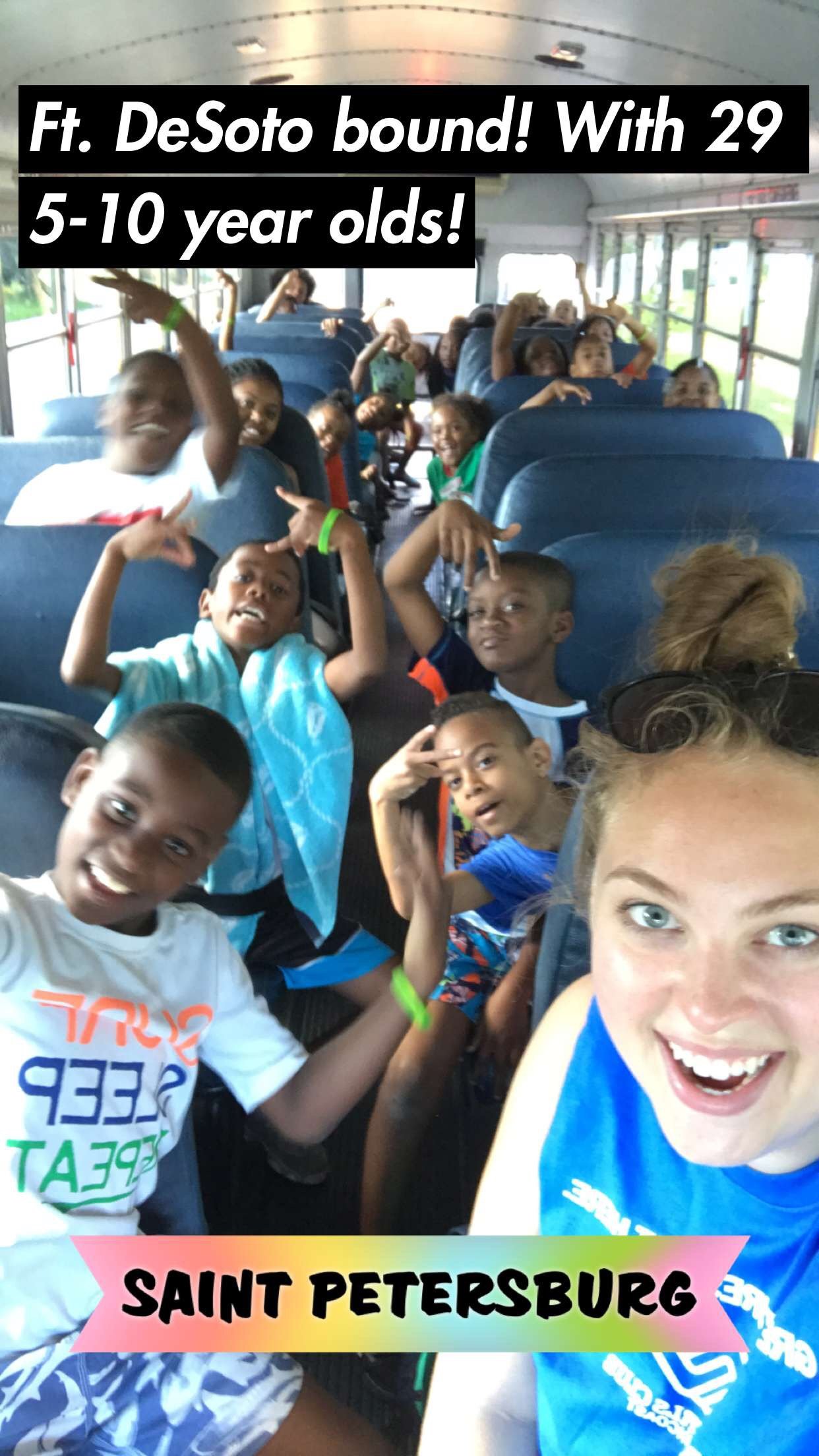
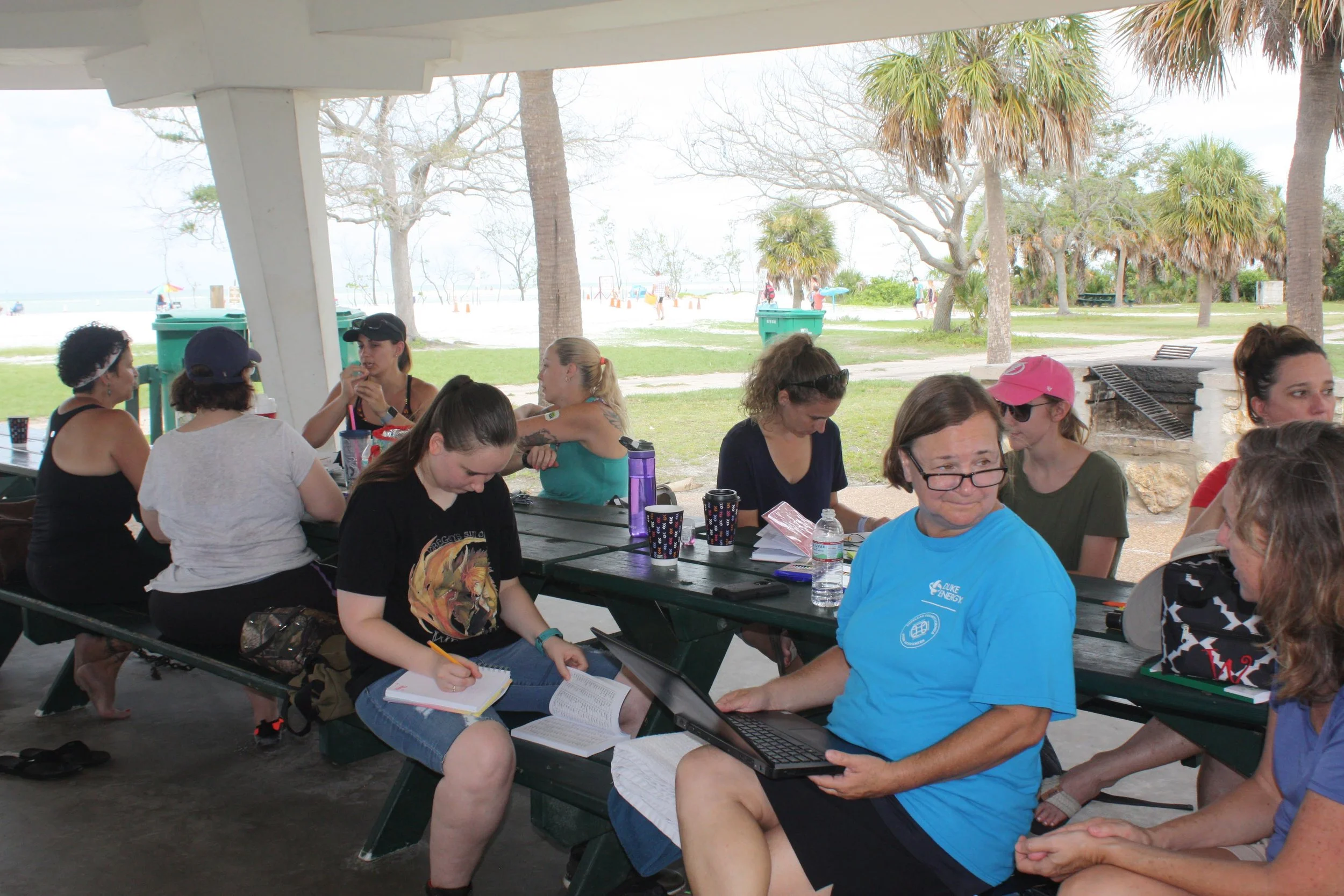
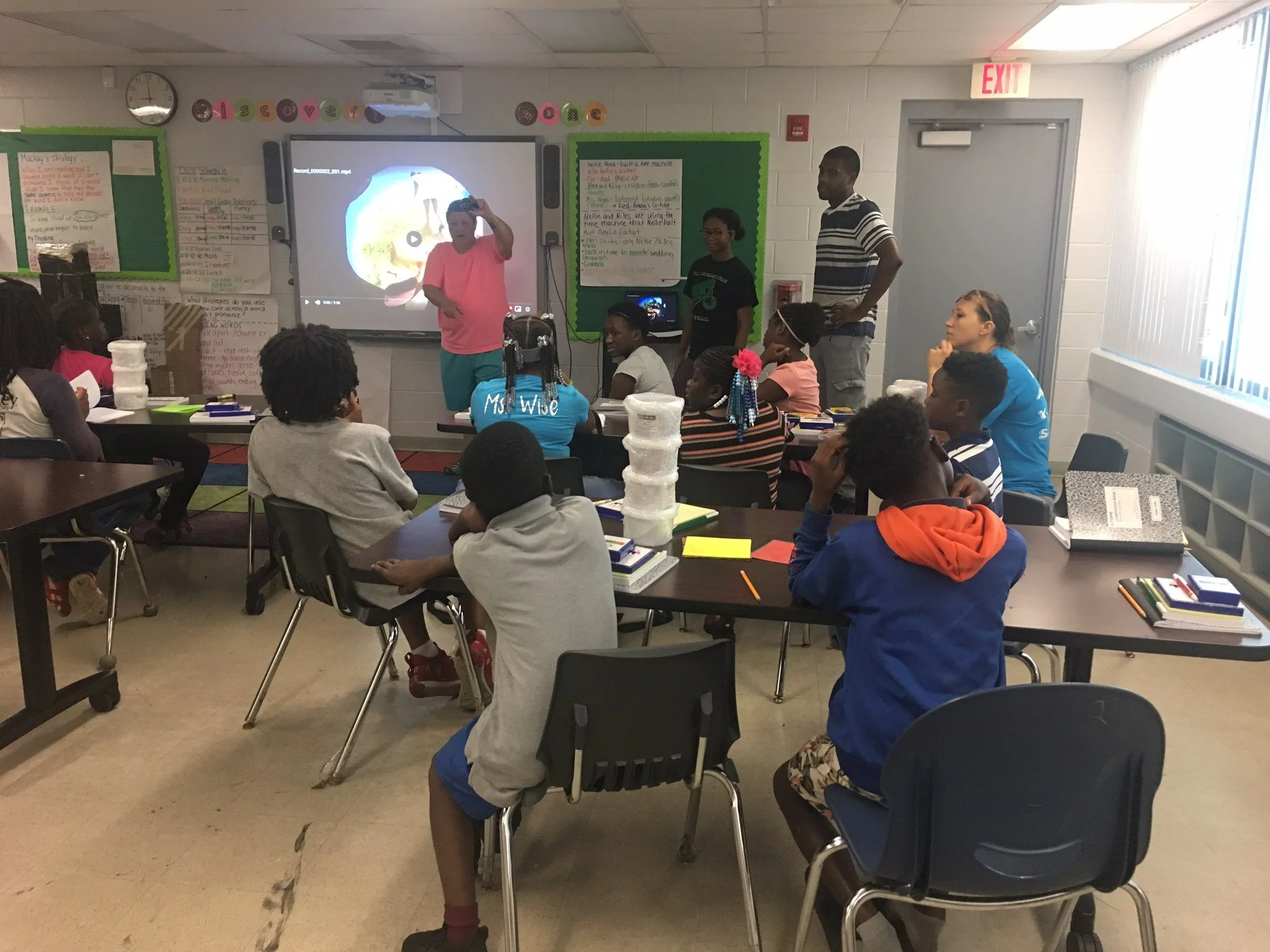
Us
A Photographic Montage Documentary
The Gopher Tortoise Research Project Film
So I got invited by my friend Dr. George Heinrich, one the most bad-ass herpetologists in Florida, to film the last day of his biannual burrow count, and i got invited the the evening before it was to take place. I had two hours at most to get to the army navy store to buy snake boots and field pants. I get there and they have a power outage so they can only take cash and there are no lights on. I told them what I needed, told them my sizes then left to find a cash machine. When I got back, they had pulled the snake boots and pants and boxed and bagged them. All I had to do was pay. I got home feeling pretty damn prepared
I woke at 5AM the next morning to find that in the dark, whoever pulled the boots, grabbed one of mine (a female’s 8.5 and a male’s 10. I had to make it work or lose the shoot opportunity, so on my right foot, already a size-and-a-half smaller than my left foot, I put on two thick, wool ski socks and stuffed the shoe of the boot with two more balled up ski socks then laced the boot on as tight as I could get it. It weighed a ton, and…
Get the rest of t he story here.
This started out as a multimedias research project for the sustainability, education, and social justice focuses of my Interdisciplinary doctoral studies in my 2nd doctorate year.
On Drugs: A Tax-Funded Racist Initiate
Conference Presentation Instructionals
Emergent Literacy Learning Focuses
The Use of Images In Storytelling
NADA Protocol: Then and Now
The NADA Protocol documentary was a Hierarchical film project for NADA Protocol and Dr. Khensu Carter for his UCLA lecture courses. The biggest production challenge was making the film remotely. Part 1 involved setting our line-up of interviewees from across the world, schedule the individual interviews (14 in all), overcome set and technical challenges presented with each interview, capture useable footage, and edit that footage to serve the individual interview stand-alones films and to comprise segments of the larger work. The larger work, NADA Protocol: Then and Now
Learner Products
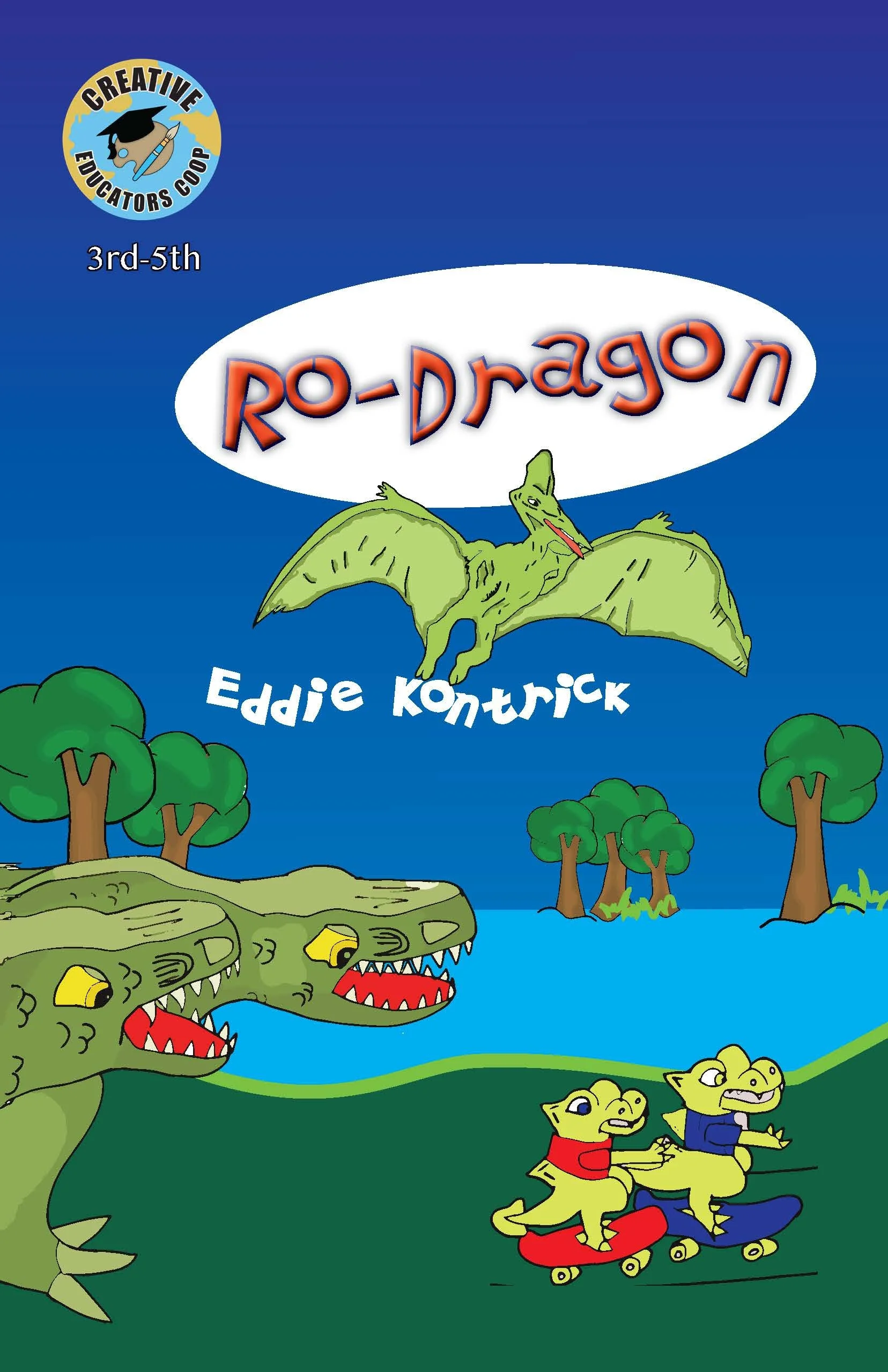

I like to help learners convert acquired skills into application results, and my learning via academia and all my field experiences and observations have made one thing very clear— learning happens best when the learning is applied to a project the learner themselves construct and invested in.